- The J Curve
- Posts
- This is what ads will never give you
This is what ads will never give you

Olga Maslikhova
April 23, 2026

This Week’s Essay

A moment from the Zócalo during Andrea Bocelli’s performance. Photo courtesy of the organizers.
This past Saturday, I sat in the Zócalo, the symbolic heart of Mexico City, among more than 300,000 Mexicans, and watched Andrea Bocelli sing to a crowd that stretched from the Palacio Nacional to the Catedral Metropolitana and spilled into the side streets of the Centro Histórico. The concert was free. It was broadcast on national television.
And it had been announced only weeks earlier, in a simple social media post from a three-year-old digital bank called Plata.
Forty-eight hours before, the company had closed a $405 million Series C at a $5 billion valuation, becoming the most valuable privately held digital bank in Latin America.
On stage with Bocelli were Los Ángeles Azules, the cumbia group from Iztapalapa whose songs have soundtracked Mexican weddings since the 1980s; Ximena Sariñana, an alt-pop singer who represents a younger, urban Mexico; and the Orquesta Sinfónica de Minería, a historic orchestra central to Mexico's classical music scene. The lineup was, on paper, incoherent. In practice, it was the most sophisticated piece of brand building I have seen in Latin American tech.
What I watched that night was not a concert. It was the moment a bank became Mexican.

To understand the significance of that moment, it helps to understand what Mexican banking actually is.
The country is underpenetrated — more than sixty percent of adults lack formal credit — and unlike Brazil, which went from all cash to almost entirely digital payments in less than a decade, driven by infrastructure like Pix, Mexico remains, in practice, a cash-driven economy.
The banking relationships that do exist carry the imprint of a system that was never designed with the customer in mind. Branches are bureaucratic. Fees are high. Contracts are opaque. Fraud and unauthorized charges are not uncommon, and when they happen, resolution is slow and often unclear. More often than not, the burden of figuring it out falls on the customer.
This has produced a population that is, by default, suspicious of banks. The question a Mexican consumer asks when a new institution appears is not, What is the interest rate, but, Who are these people, and when will they disappear with my money. It is a question that no performance marketing campaign can answer, because the answer is not informational. It is emotional. It is cultural. It is rooted in trust. And trust takes generations to build.
Into this landscape, in the past three years, a wave of digital challengers has arrived: Nubank's Mexican subsidiary, Revolut, Klar, and a dozen smaller players. Competition has intensified. Products have improved. But the category itself is converging.
Credit is credit. Cashback is cashback. Every bank will eventually offer roughly the same rates, the same rewards, the same app.
And the brand that cannot transcend the product layer will eventually be priced against it.
Last Saturday night, Banco Plata chose to transcend it.
— — —
Banco Plata was founded in 2023 by Neri Tollardo, Alexander Bro, Danil Anisimov, and other members of the Tinkoff Mafia, alumni of the Russian digital bank Tinkoff — one of the most sophisticated retail financial institutions of the 2010s — with Oleg Tinkoff as an early backer.
In the three years since, Banco Plata has grown to more than 3.5 million active credit card customers. It has built an $800 million loan portfolio on the back of proprietary AI risk models. The company secured its banking license from Mexico's regulator, the Comisión Nacional Bancaria y de Valores, in late 2024 and launched full banking operations as Banco Plata in March of this year. It has raised more than $2 billion in combined debt and equity. Its investors include Kora, Hedosophia, Moore Strategic Ventures, and TelevisaUnivision, and most recently — in the round that closed two days before the concert — Bicycle Capital, the Qatar Investment Authority, BTG Pactual, and Valor Capital Group.
These are the numbers. They explain why Banco Plata could afford to put Bocelli in the Zócalo. They do not explain why it chose to.
— — —
The choice makes sense only when you understand the Mexican customer Banco Plata is going after.
Mexican consumer finance has long been split between two extremes. At one end sit the affluent, well served by incumbents like BBVA and Santander. At the other end sits a vast cash economy that has been largely excluded from formal credit. Between them is an enormous middle — the salaried employees, the small business owners, the gig workers, the young professionals, the teachers and nurses and freelance designers who together constitute Mexico's emerging middle class. This middle is the goldmine of Mexican retail finance — large, digitally native in practice, and underserved for generations.
It is also one of the most difficult customers in the world to acquire efficiently, because the ordinary tools of digital marketing — ads, landing pages, conversion optimization — run aground on the one thing this customer does not have to give, which is trust.
You cannot buy that customer's trust with a Google ad. You can buy her attention, briefly. You cannot buy her belief that you will still be there next year, or the year after, or when her daughter needs a loan for university.
Trust is built in brick. Banco Plata arrived with the whole wall.
— — —
The Zócalo is the beating heart of Mexico — the plaza where presidents address the nation and where Independence is celebrated each September, surrounded by the Palacio Nacional, the Catedral Metropolitana, and the ruins of the Templo Mayor.
The event itself was organized in collaboration with the government of Mexico City — which meant that Banco Plata did not merely rent a stage. It was received as a co-author of a cultural gift to the capital — a bank, three years old, run by Tinkoff alumni, positioned alongside the state as a patron of Mexican public life. That kind of partnership is a form of institutional legitimacy that no amount of paid digital advertising can buy. It makes people see you differently. It changes how you're received. It opens doors that performance marketing will never reach.
And then there was the lineup. The decision to pair Bocelli with Los Ángeles Azules — to put a global symbol of operatic prestige on the same stage as a cumbia band from Iztapalapa that represents the sound of working-class Mexico — looks absurd on paper and inevitable in the plaza. Mexican premium brands typically signal aspiration by distancing themselves from cumbia. They go upscale, international, antiseptic. Banco Plata did the opposite. It said, in effect, that the Mexico it was building for included the grandmother who cries at Con te partirò, Bocelli's signature aria, the father who dances to Cómo te voy a olvidar, a cumbia classic, and the daughter who grew up with Ximena Sariñana on her phone — and that all three belonged at the same concert, in the same plaza, receiving the same gift.
— — —
What Banco Plata demonstrated that night was not an enormous marketing budget. It was cultural confidence. The ability to read a country correctly, to understand its music, its contradictions, its aspirations, and to hold all of them on a single stage without condescension. That ability cannot be purchased and it cannot be focus-grouped. It is either present in a founding team or it is not, and in a country where generations of institutions have failed the consumer by failing to see her, the signal it sends is unmistakable.
— — —
But wasn't this insanely expensive?
The economic logic of the evening, when you work it out, is more efficient than it looks. Awareness reached, conservatively, the low millions. Emotional engagement was at ceiling. Social amplification was organic and self-replicating — every attendee walked away with a story that will be retold a hundred times at kitchen tables and in WhatsApp groups — the primary communication layer for millions of Mexicans — over the next year. The per-impression cost, almost certainly, was lower than what Banco Plata's competitors were paying for clicks that same weekend.
Think about it for a second. A premium CPM on a targeted Meta ad in Mexico City runs to real money, and the impression dies the moment the scroll continues. An impression from the Zócalo, by contrast, lives in the memory of the person who received it, gets retold, gets amplified, gets attached to the brand for years.
One is a rental. The other is ownership.
And every one of the Zócalo impressions carried something a click cannot: gratitude.
— — —
A bank gave a country a gift. That is what people will remember.
A great brand is how you make people feel. Banco Plata put Andrea Bocelli in a Mexican cultural context. It wrapped a global symbol of prestige in the deepest layers of local identity and gave it away.
Because credit is credit. Every bank will eventually offer roughly the same rates, the same cashback, the same app. The product layer flattens.
What doesn't flatten is the emotional layer. Loyalty, trust, the sense that a brand has touched your heart and soul — you cannot achieve any of it through efficient performance marketing.
For the founders reading this: ask what you would have to give your customers that they would tell their family about. That is the test. If the answer is nothing — if everything you do could be replaced tomorrow by a competitor with slightly better targeting — you do not have a brand. You have a temporary price advantage. Price advantages compound to zero.
Banco Plata passed the test on Saturday night. Every person in that plaza told their family. A bank became part of Mexico in a single evening, because it had the confidence and the cultural fluency and the taste to understand that great brands are not built by efficiency.
They are built by giving people something to remember.

Paulo Passoni and I discussed Plata in details in our recent Debrief. Check it out!
 |  |
This Week’s Number
30 years
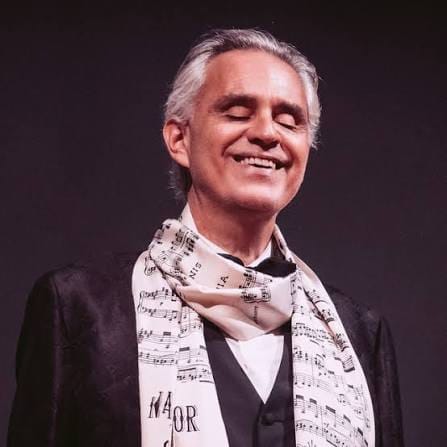
Picture found on the internet
The time it took Andrea Bocelli to compound from an unknown, blind Italian lawyer into one of the most valuable music brands on earth. His 1996 album Romanza — the one he performed in full on Saturday night — has stayed in print and on rotation for three decades, which is a lifetime in an industry where most albums have a commercial half-life measured in months.
Trends I’m Watching
1. Your CEO is your most underused marketing channel.
The best companies already know this. They're hiring teams to build and scale the CEO's voice — across writing, podcasts, social, and live appearances. The logic is simple.
Paid media is commoditizing. AI content is effectively free. Every competitor has the same targeting and the same playbooks.
The only moat left is a human at the top of the company with something real to say.
Most founders still treat their presence as a nice-to-have. A post here, a podcast there, when there's time.
The companies winning this decade treat it as a must-do.
Turn the camera on.
2. Private communities are the new loyalty programs.
Points programs are dead. The brands that keep customers now are the ones that run actual communities — WhatsApp groups, Discords, private dinners, invite-only product drops.
Equinox, Erewhon, Aimé Leon Dore, and a wave of DTC brands have figured out that proximity is the new points balance.
The modern loyalty program is not a tier. It is a table.
3. AI is making "human-made" a luxury signal.
As AI floods every channel with synthetic content, anything made by a real person is becoming a premium marker.
Hand-drawn illustration is commanding prices it has not seen in twenty years. Photographs of real things, shot on real film, are outperforming AI-generated imagery in every engagement metric. Handwriting, imperfection, grain, visible effort — all of it is becoming valuable again.
The brands that over-polish their output with AI will slowly blend into the category.
The ones that show the human hand will stand apart.
4. Nostalgia is a pricing strategy.
Gen Z does not want new things. They want old things, or new things that feel old.
Film cameras. Vinyl. Flip phones. Stanley Cups that look like they came out of a 1993 station wagon. New Balance 990s.
Brands that can credibly reach backward are charging a premium to do it. Heritage is the most undervalued asset on most brand balance sheets.
The companies that survived long enough to have a past are now monetizing it.
5. Brands are becoming media companies. Media companies are becoming brands.
The line is gone.
Barstool built a beer. MrBeast built a chocolate company. Liquid Death built a media arm that rivals most agencies.
Every successful consumer brand now has to decide whether it is building a media operation around a product, or a product around a media operation.
The companies that cannot answer that question are getting outrun by the ones that can.
What I’m Loving
Rory Sutherland, Alchemy — The book that explains, at a psychological level, why moves like Plata-Bocelli work and why most marketing decks never would. Sutherland's thesis is that the most valuable business moves are often the least "logical" — and that brands optimizing for efficiency lose to brands optimizing for meaning. If you liked this week's essay, read this book next.
Ana Andjelic, The Sociology of Business — The single sharpest writer on luxury, brand strategy, and cultural capital working today. Her weekly analysis of how brands connect to culture is the closest thing to a masterclass available in newsletter form. If you care about how brands actually build cultural authority rather than just market share, this is the Substack to be reading.
Paul Graham, Do Things That Don't Scale — Evergreen but especially relevant this week. Banco Plata booking Bocelli in the Zócalo is, in a way, the ultimate "doesn't scale" move. PG's framing — that the moves which seem inefficient are often the ones that define the company — is the perfect adjacent read.
Octavio Paz, The Labyrinth of Solitude — To understand why the Zócalo works the way it does, and why a bank co-authoring a cultural moment there carries the weight it does, you have to understand Mexico. Paz is where that understanding begins. A little more literary than my usual picks, but the essay this week demanded it.
Thanks for reading,
Olga

P.S. If this issue was valuable to you please share it with a founder who needs to hear it. Let’s build LATAM’s next tech leaders—together
🎙 The J Curve is where LATAM's boldest founders & investors come to talk real strategy, opportunity and leadership.