- The J Curve
- Posts
- The Idiosyncratic Bet
The Idiosyncratic Bet

Olga Maslikhova
December 31, 2025


I'm writing this final essay of the year from a little cabin tucked away in the jungle somewhere in Brazil. There are monkeys on the porch eating bananas. The birds are louder than NYC traffic at rush hour. I love it here. I love Brazil. I love the chaos and beauty of emerging markets. Which is funny, because the mentality that comes with them is complicated.

Here’s my little cabin
As a product of the emerging markets mentality, I know that success is punishable.
We don't celebrate it—not culturally, not instinctively. We dwell on how fucked up our reality is. We discuss the dysfunction, the corruption, the incompetence at the top. We bond over what's broken. And when someone succeeds, the first instinct is suspicion: what did they do to get there? As if the answer couldn't possibly be that they were simply better, faster, more relentless.
I am also lucky enough to have spent a huge portion of my life in New York City, where the mentality is the opposite.
New Yorkers are go-getters. We don't take no for an answer. We know how to sell a good story—to investors, to customers, to ourselves. There are mechanisms for lifting yourself out of the dirt: networks that open doors, mentors who pull you up, a culture that treats reinvention as a feature rather than a bug. Failure is a data point, not a death sentence. When someone succeeds, the first instinct is curiosity: how did they do it? What can I learn?
I hold both of these worlds inside me. I am both. The skepticism that comes from emerging markets—the pattern recognition for bullshit, the hard-won understanding that systems fail and you'd better have a backup plan. And the New York hustle—the belief that you can will something into existence, that the story you tell shapes the reality you build.
That dual citizenship—plus five years on the ground in Brazil and a lifetime in venture—shapes how I see the Brazilian tech ecosystem.
—
Brazilian founders don't have a quality problem. They have a distribution problem.
They are under-told, under-sold, and under-distributed globally. The companies exist. The talent exists. The grit—forged by operating in one of the most complex business environments on earth—absolutely exists. What's missing is the storytelling. The conviction. The cultural permission to be ambitious out loud.
Too often, Brazilian founders enter investor conversations already on the defensive—leading with disclaimers about currency risk and political instability before they've even made the case for what they're building.
This is backwards. The story should be: I built a profitable, hundred-million-dollar business in an environment that would break most American operators. Imagine what I can do with real capital behind me.
We need to create a culture of celebrating success. Because entrepreneurship is, at its core, an act of optimism—a bet that you can build something better than what exists. And that bet requires cultural permission. It requires heroes, not suspects. Conviction, not disclaimers.
Taking risk is at the heart of entrepreneurship. But risk-taking is cultural before it is financial. If you grow up in an environment where success is punishable and failure is shameful, you don't take risks. You optimize for safety. You build what won't embarrass you rather than what could change the world.
The financial infrastructure for entrepreneurship in Brazil has improved dramatically over the past decade. We have venture funds, accelerators, angels, secondary markets. The capital exists—even if it's tighter now than it was in 2021. The cultural infrastructure is still catching up—the belief that success here is real, repeatable, and worth celebrating.
This is what The J Curve has been for me.
For four years, we've been telling these stories—in English, to a global audience, with conviction.
This year we released 23 episodes featuring founders building companies that challenge outdated assumptions about what's possible from Latin America. We crossed 2 million views on YouTube, with five consecutive episodes surpassing 100K. We landed in the top 5% of video podcasts globally and were awarded a Spotify Marathon Show. Our Spotify audience grew 819%. The newsletter grew 500%, with a 55% open rate.

I am so proud of this award
But the numbers aren't the point. The point is what they represent: hunger.
Hunger from within Latin America—founders and operators who are tired of being talked about in caveats, who want to see their own ambition reflected back at them, who need proof that the path exists because someone else has walked it.
And hunger from outside. LPs and allocators watching U.S. venture deliver diminishing returns, starting to ask: where else can this model actually work? Where else is there enough chaos to create alpha, enough talent to build category-defining companies, enough inefficiency to reward those who do the work to understand it?
The answer isn't one market. It's a category of markets—emerging economies where infrastructure gaps create opportunity, where complexity filters out tourists, where founders are battle-tested in ways their American counterparts never had to be. Latin America is one of these. Brazil is the biggest bet within it.
The J Curve was built to be the bridge. Not to translate Brazil for Americans or explain Silicon Valley to Brazilians—but to make the case, with evidence, that this is a market that rewards conviction. That the venture model doesn't just work in emerging markets—it can deliver disproportionate returns precisely because of the complexity, not despite it.
And now I'm making a bigger bet.
The moment feels right to scale what we've built. To keep putting Brazil in the global VC conversation through the podcast and the newsletter—but to also go beyond storytelling. To put real skin in the game.
The thesis is simple: Brazilian founders are undervalued, and the ones who learn to tell their stories with conviction will be the ones who attract the capital, the talent, and the attention they deserve. We want to be in business with them.
More on that soon.
—
But for now, I'll leave you with this.
As Paulo Passoni said in our season finale: "Venture and growth is about disruption—going from 0.1% market share to 20%. That journey is idiosyncratic. It has nothing to do with the macro."
Nine out of ten allocators will tell you why Brazil is too risky. They'll cite the currency, the politics, the complexity. And they'll miss the point entirely. The journey from zero to one—from obscurity to category leadership—doesn't care about the Selic rate. It cares about whether this founder, with this team, in this market, can win. That's the bet.
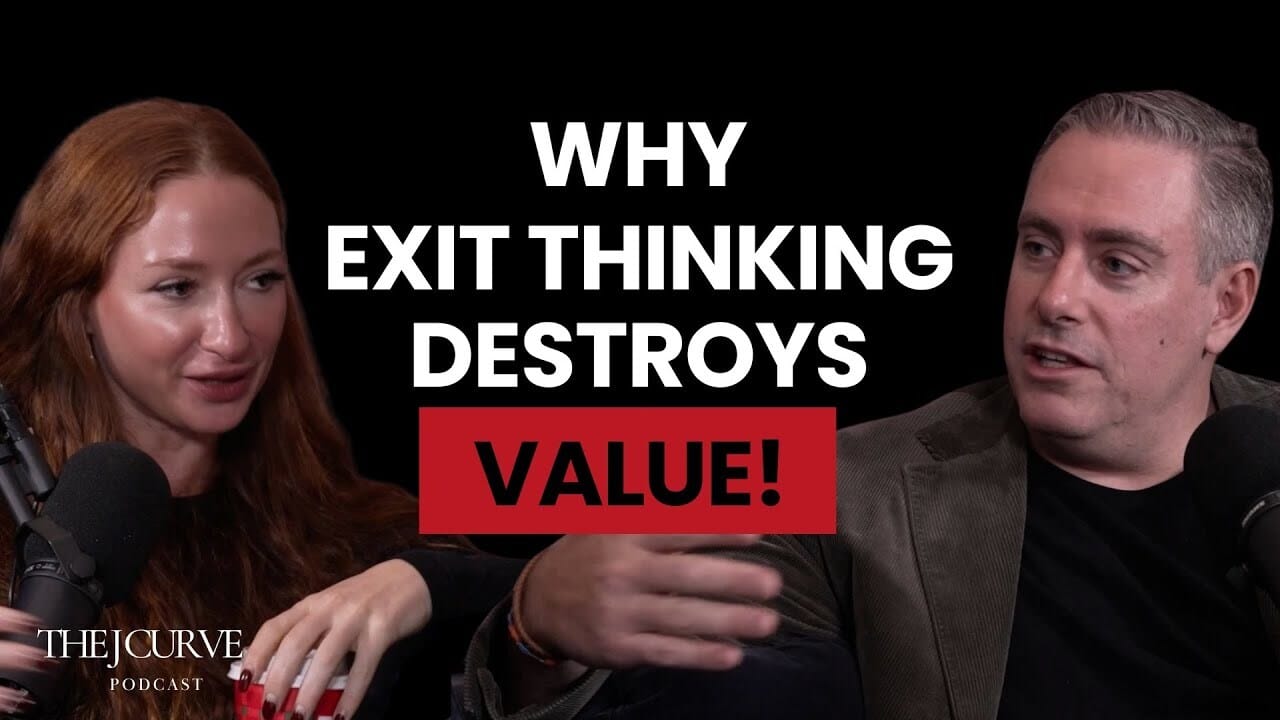
 |  |  |
The emerging markets mentality teaches you to see the dysfunction first. To hedge. To wait for conditions to improve. But conditions don't improve. You improve them by building anyway.
So as the year ends, a few things I'm carrying into 2026.
Lift as you climb. The founders building next to you aren't your competition—they're your signal to the world that this market is real. Every win in this ecosystem makes the next one easier to believe in.
Move before you're ready. The perfect moment doesn't exist. The founders who break out aren't the ones with the clearest path—they're the ones who started walking before the fog lifted.
Speak with conviction. About your company, your market, yourself. Caveats don't protect you—they just give people a reason to tune out.
Here's to 2026. Here's to the idiosyncratic bet.
—
One more thing before I go—four books that have shaped how I think and work:
Mindset by Carol Dweck. The original framework for understanding why some people improve and others plateau. Talent is a starting point, not a ceiling.
The Courage to Be Disliked by Ichiro Kishimi and Fumitake Koga. A conversation about Adlerian psychology disguised as a philosophy book. The core idea: freedom means accepting that not everyone will like you—and building anyway.
The Creative Act by Rick Rubin. Not a how-to. A way of seeing. Rubin treats creativity as a practice of attention and openness, not output.
Atomic Habits by James Clear. The most practical book on behavior change I've read. Small systems beat big goals.
And if you prefer listening: here's a Spotify playlist with my favorite business podcasts. This one in particular is perfect for year-end—full of frameworks to reflect on what actually worked, what didn't, and how to think about goals for the year ahead. It also does a great job calling out the BS we all sell ourselves.
Happy New Year to you and yours,
Olga

P.S. If this issue was valuable to you please share it with a founder who needs to hear it. Let’s build LATAM’s next tech leaders—together
🎙 The J Curve is where LATAM's boldest founders & investors come to talk real strategy, opportunity and leadership.