- The J Curve
- Posts
- The expert is the last person to build the future
The expert is the last person to build the future

Olga Maslikhova
April 02, 2026

This Week’s Essay
There is a specific kind of knowledge that kills companies before they begin.
It is not ignorance of the customer. It is not ignorance of the problem. Those things matter and you should understand them deeply.
It is expertise in the industry you are trying to disrupt.
When you spend enough time inside a system — as an employee, an investor, a consultant, an observer — you develop something that looks like wisdom but sometimes functions as paralysis. You learn why things are the way they are. You understand the regulatory constraints, the incumbent advantages, the failed attempts, the structural reasons the problem has persisted. You build, without realizing it, a detailed mental model of why this is hard.
And hard things, when you can see all of their difficulty clearly, have a way of not getting started.
The founders who change industries are disproportionately not from those industries.
Reed Hastings was not a video rental executive. He was a software entrepreneur who was annoyed about a late fee. Travis Kalanick was not a taxi industry veteran. He was a tech founder who couldn’t get a cab in Paris. Brian Chesky and Joe Gebbia were not hoteliers. They were industrial designers from RISD who couldn’t make rent.
The pattern holds in Latin America as well.
Gabriel Braga and André Penha were not real estate developers — they were computer scientists at Stanford who tried to rent apartments in São Paulo and found the process so painful they built QuintoAndar to fix it. Pedro Conrade was 23, making $300 a month, and frustrated that having a bank account in Brazil cost so much. If he had known how difficult building Neon would be, he would never have started.
An insider would have known why the model wouldn’t work. They would have understood the incumbent relationships, the regulatory capture, the unit economics that made the existing system hard to displace. They would have asked smarter questions — and found better reasons not to proceed.
The outsider just saw a problem and assumed it could be fixed.
This is not an argument for being uninformed.
The best founders learn obsessively — about their customers, about their unit economics, about the specific mechanics of the thing they’re building. But there is a difference between learning about the customer and learning about the industry.
Learning about the industry, too early, too deeply, can make you complicit in its assumptions.
Industries are full of shared beliefs that nobody questions because everyone inside them has spent years being rewarded for accepting them. The belief that certain customers aren’t worth serving. The belief that certain problems are unsolvable. The belief that the existing structure exists because it’s optimal, rather than because it calcified before anyone thought to challenge it.
The outsider doesn’t have those beliefs yet. They see the customer and the problem without the institutional context that explains — and normalizes — why the customer is underserved.
That is not clarity. It is a form of naivety paired with courage and a let’s-see-how-this-goes mentality. It is not a strategy. It doesn’t look like an advantage from the inside. It just looks like someone who doesn’t know what they don’t know — and moves anyway.
There is a window, at the beginning of any ambitious project, when you don’t know enough to be appropriately afraid.
You feel the gaps in your knowledge constantly. You ask questions that insiders find naive. You approach problems sideways because you don’t know the conventional path, and sometimes — more often than the conventional wisdom would suggest — the sideways path turns out to be shorter.
The founders who build the most interesting companies tend to enter their industries through this window, before it closes.
Once you understand why something is hard, your relationship to it changes. You begin to optimize within the constraints rather than question whether the constraints are real. You start building the company the industry expects rather than the company the customer needs.
If ignorance is occasionally an advantage, then preparation — of the wrong kind — is occasionally a disadvantage.
This does not mean don’t learn. It means be deliberate about what you learn and when. There is a sequencing question underneath every ambitious idea: how much do you need to know before you start, and how much will you learn faster by starting?
The answer, in most cases, is that you need to know far less than you think before you start. You need to understand the customer’s problem deeply. You need enough to take a first step. Beyond that, the learning that matters most happens in contact with reality — with users, with the market, with the specific texture of the problem as it actually exists rather than as it exists in research and frameworks.
The most dangerous preparation is the kind that gives you confidence in your understanding of why something is hard, before you’ve discovered whether those reasons are actually the relevant ones.
It’s a pattern that shows up too consistently to be accidental. The people who build the things that weren’t supposed to exist tend to begin from a position of genuine, sometimes embarrassing, ignorance about why they couldn’t.
The knowledge came later. The company came first.
This Week’s Number
85%
The share of consumer fintech Neon’s collection process that today requires zero human interaction. AI doing the work of a collections department.
Community Picks

 |  |  |
Five things Pedro Conrade said that we haven’t stopped thinking about.
On hiring
Hire less people. Hire more senior people. Build one thing at a time.
On M&A
Less romantic about M&A than he used to be. The best decision in the majority of cases is to build in-house. We were barely able to take care of our own problems — imagine trying to integrate another company.
On raising from strategic investors
When the VC world was crazy hot, everyone said don’t take strategics — it’s dangerous. He always did the opposite. When times go bad in credit, they say: we’ve seen this cycle before. Hold tight. In six months you’ll see the results.
On the impact of Pix
Brazil’s five incumbent banks spent decades accumulating behavioral data that challengers couldn’t touch. Pix rewired that overnight — collapsing transaction costs while handing fintechs full visibility into who clients are, where money flows, and when.
On building globally from Brazil
Don’t underestimate the potential of Latin American business. We can be global. We can be big.
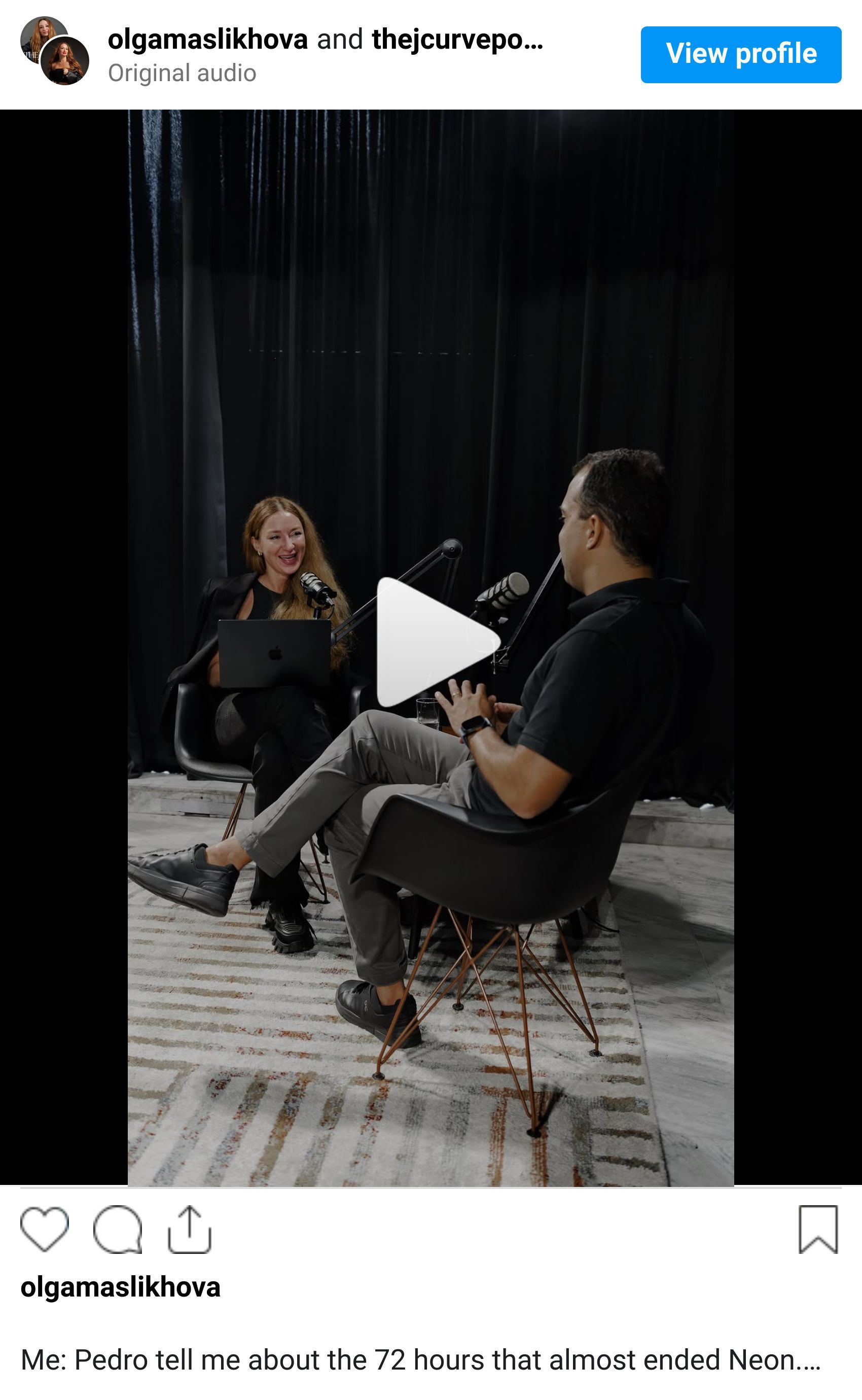
Here’s the highlight reel of my favourite moments from the conversation with Pedro.
What I’m Loving
Three things worth your time this week.
1. 20VC: Marc Andreessen — The Future of Venture Capital (March 30, 2026)
Andreessen on AI, overstaffing, great founders, and why the labour displacement narrative is completely wrong. One of the most opinionated conversations in venture this year.
2. Invest Like the Best: Mitchell Green — Building the Machine (March 24, 2026)
Mitchell Green built Lead Edge Capital into a $5B growth equity firm by cold calling 10,000 companies and applying an eight-point filter to find the handful worth backing. No power law chasing. No fluffy founder alignment. Just a ruthlessly systematic machine designed to hit doubles and triples consistently. The most disciplined investor conversation I’ve heard this year.
3. Extreme Ownership — Jocko Willink & Leif Babin
Two Navy SEAL commanders who took the lessons from Ramadi — the most dangerous city in Iraq — and turned them into a leadership framework that applies to any team, any company, any situation. The core idea: there are no bad teams, only bad leaders. Everything that goes wrong is your fault. Everything. Once you accept that, you stop making excuses and start solving problems. A book I come back to every year.
Thanks for reading,
Olga

P.S. If this issue was valuable to you please share it with a founder who needs to hear it. Let’s build LATAM’s next tech leaders—together
🎙 The J Curve is where LATAM's boldest founders & investors come to talk real strategy, opportunity and leadership.